
Love, remembered in little ways
Life with a senior dog: A kinder everyday routine
Familiar places, easier paths, and time together at their pace. Small ways to notice what your older dog needs while keeping the routines you share.
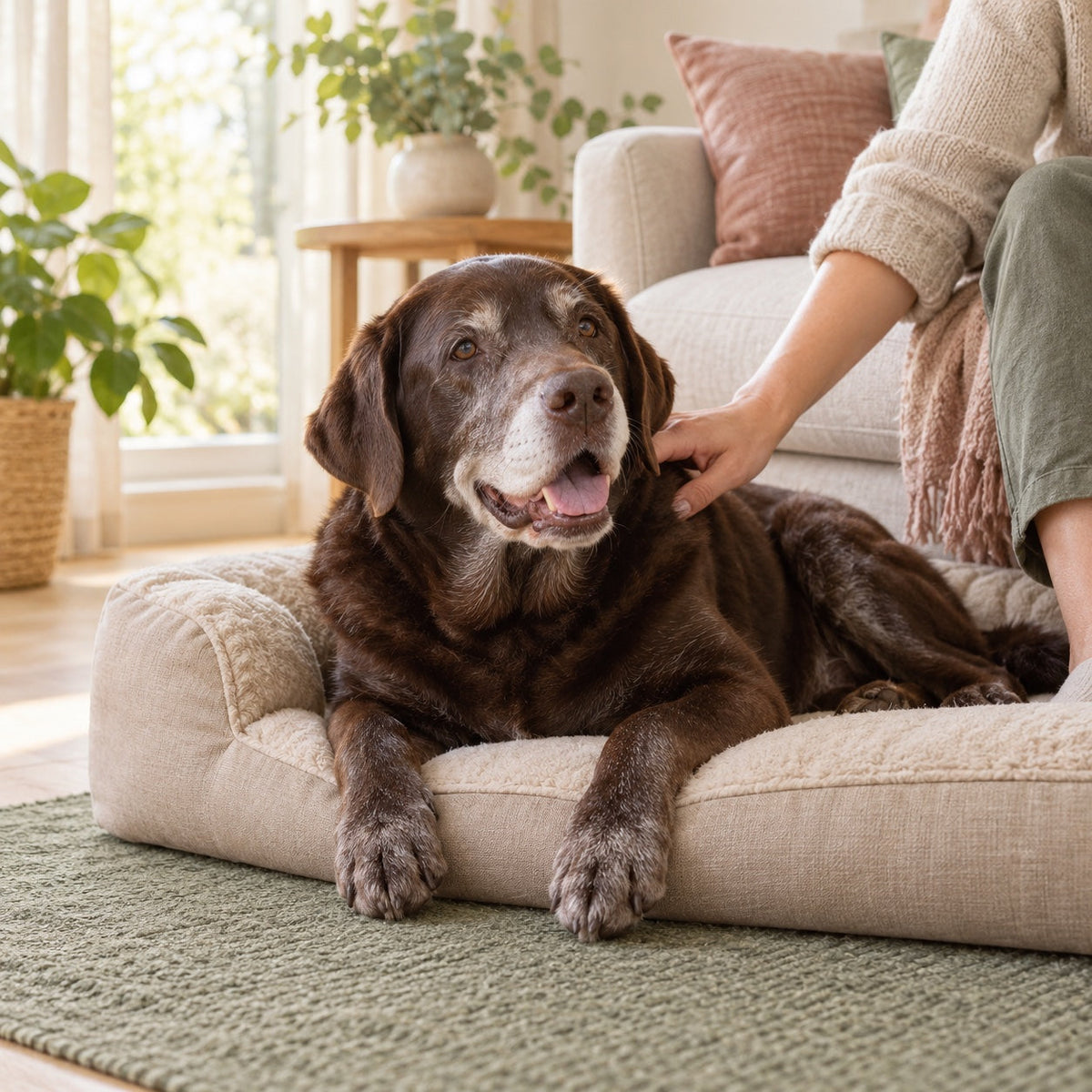
The walk may take a little longer. The nap may happen closer to where you sit. Life with an older dog can bring changes to the shape of an ordinary day, alongside habits that remain wonderfully familiar.
You do not have to fill that day with big adventures. A useful place to start is the route from their bed to the door, the way they settle beside you, and any changes you want to discuss with their veterinarian.
Comfort and connection can belong in the same routine. So can curiosity: what is easy for your dog now, and what could be easier?
Notice changes without explaining them away
“Getting older” is not a diagnosis. If your dog is newly reluctant to rise, walk, use stairs, or be touched, tell your veterinarian. AAHA's guide to senior pet health problems identifies changes in movement and behavior as possible signs of discomfort.
Write down what you see, when it started, and whether it happens in a particular situation. “Hesitated on the kitchen floor three mornings this week” is more useful than deciding on a cause yourself.
Photographs or short videos may help your veterinary team understand what happens at home; AAHA discusses this in its senior-pet evaluation guidance. Do not ask your dog to repeat an uncomfortable movement for the camera. A note is useful too.
Walk through the home from their point of view
Look at the places your dog uses every day. Is the route slippery? Does reaching their favorite resting place require a jump? Are objects blocking a familiar path?
AAHA's senior-pet comfort guidance discusses supportive bedding, nonslip rugs, and ramps as possible adaptations. Ask your veterinarian which changes suit your dog's mobility, and introduce equipment with care.
You might begin by clearing a route or securing a rug so it cannot slide or bunch. Put a comfortable resting option where your dog can still be near you. Do not assume that moving their bed to the quietest room is helpful if it separates them from the company they seek.
Adapt a favorite activity together
Think about the part of a routine your dog appears to enjoy. Perhaps the outing includes time to investigate familiar smells, or the evening ritual is mostly about being beside you.
Discuss appropriate activity with your vet, especially if your dog has a health condition or a new change in stamina. Let that advice guide any adjustments to walks and games.
Within those boundaries, give yourself permission to make the shared moment simpler. Sit nearby during a rest, offer familiar company, or spend a little longer at a comfortable spot. You do not need to compare every day with what your dog did years ago.
If a plan stops suiting them, change it. A shorter shared activity does not make the relationship smaller.
Keep practical notes separate from memories
A practical log can hold observations about eating, drinking, movement, toileting, sleep, or changes you want to mention at an appointment. AAHA's quality-of-life resource can help you prepare for that conversation; it does not replace an individual assessment.
A memory note has a different job. It might hold the sound of their greeting, the way their ears sit, or the favorite corner they still choose. Neither record needs to be elaborate.
On a difficult day, you can make only the practical note. You are not failing to treasure your dog because you did not take a photograph.
Take pictures that fit the moment
If your dog is settled and comfortable, photograph them where they are. Keep their silver muzzle, familiar markings, and resting posture. Avoid asking for repeated poses or moving them to a surface that is harder to manage.
Save the original photo alongside a sentence about the day. If you later choose it for a pet portrait, tell the artist which details matter to you. The age you recognize in their face can be part of the likeness.
For now, there can be a bed beside your chair, a clear path through the room, and the familiar pleasure of being together.
The cover is an AI-generated illustrative scene. This article offers general ideas, not an individual care plan. Veterinary sources checked on October 20, 2026.