
Love, remembered in little ways
A calmer Halloween with your pet: Costumes, doorbells, and little moments
A comfortable costume is optional. A little preparation, a familiar place to rest, and time together can make Halloween gentler for your dog or cat.
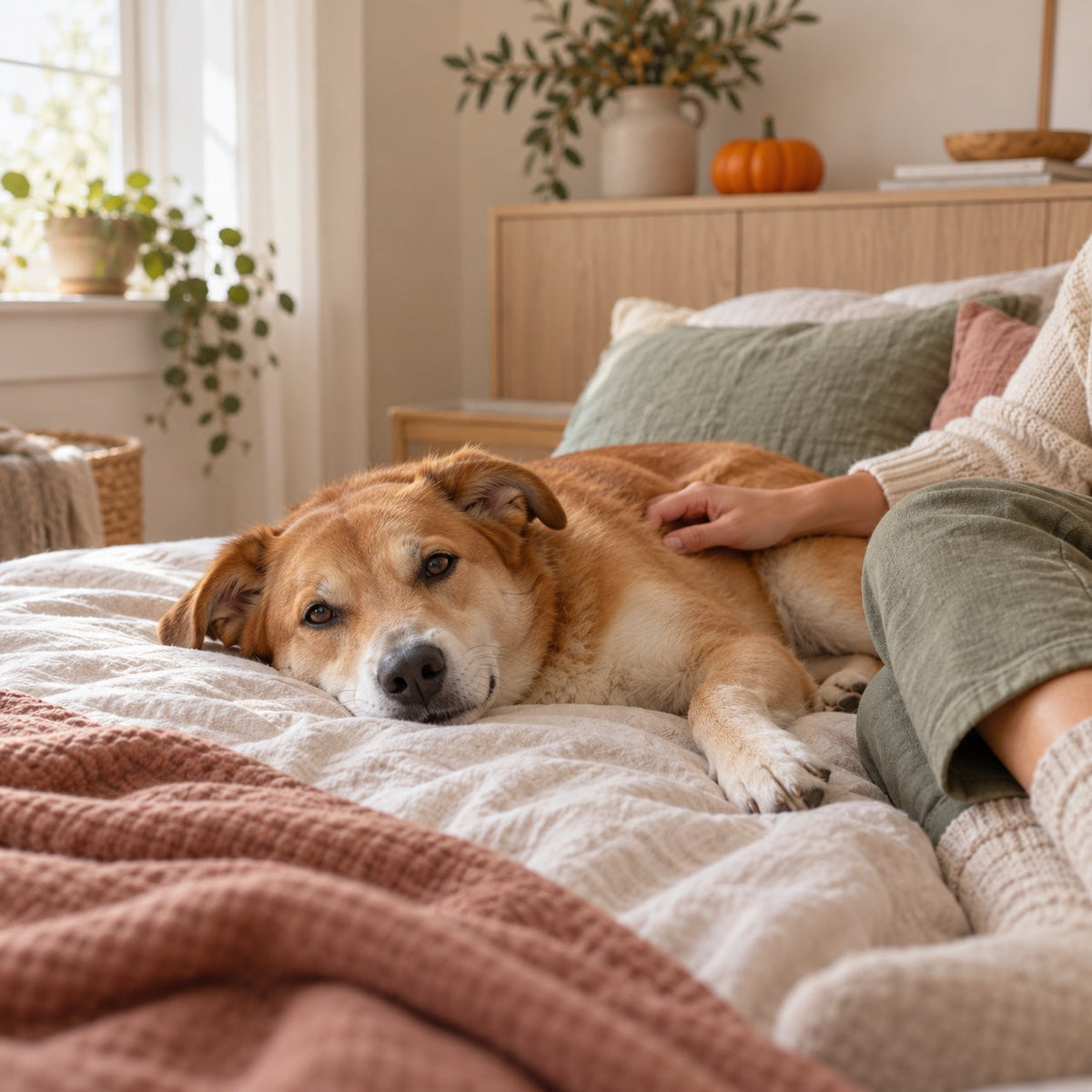
The doorbell rings. Someone in a tall hat appears at the window. A bowl that usually holds keys is suddenly full of interesting smells. Halloween changes a familiar home in small ways that can feel very big to a pet.
You can include your dog or cat in the evening while keeping their usual comforts close. Start with what they enjoy, then build the celebration around that.
In Rover's October 2026 survey of 1,000 U.S. pet parents, 60% planned to dress their pets in costumes and 36% reported greater concern about their safety at Halloween. These are self-reported survey responses, but they capture a familiar tension: wanting a lovely memory and wanting your pet to feel comfortable.
Let the costume be optional
A pumpkin-colored outfit might be your idea of fun. Your pet may prefer the blanket they sleep on every afternoon. Both can belong in your Halloween plans.
The ASPCA recommends costumes only for pets who enjoy them. Check that an outfit allows normal movement, sight, breathing, and vocalizing, with no loose pieces to chew off. Try it before the evening, supervise, and take it off if your pet seems uncomfortable.
For your photo, a seasonal cushion or an unlit pumpkin in the background can do the decorating. Your pet does not need to wear anything special.
Make a plan before the first doorbell
Prepare a familiar, secure room away from the entrance, with water, bedding, and the things your pet normally uses; include a litter box for a cat. Let everyone know which door must stay closed. Check tags and microchip contact details in advance.
North Oatlands Animal Hospital's Halloween checklist emphasizes setting up before visitors arrive. If your pet has severe fear around guests or noise, ask your veterinarian about a suitable plan ahead of the holiday.
A small household note can keep the evening simple: who answers the door, who checks on the pet, and where the sweets go afterward. Guests should know that the pet's resting space is private.
Keep the treats and decorations out of reach
Store candy in a closed cupboard, including children's bags when they get home. Chocolate can be dangerous for cats and dogs, and sweets containing xylitol are dangerous for dogs. Keep wrappers, cords, small decorations, and open flames away from pets. These precautions are included in the ASPCA's safety guidance.
If your pet may have eaten something harmful, contact a veterinarian promptly, even if they seem well. Keep the packaging and estimate the amount and time. Do not induce vomiting unless a veterinarian instructs you to.
Keep one little moment from the evening
Take a photograph when your pet is already settled, in a place they choose. Leave room for their whole face and the details you love: a lopsided ear, the white toes, the way their chin rests on the sofa. If they move away, let the photograph wait.
You could add one sentence to the picture: what you were doing together, or the ordinary habit that made you smile. A memory does not need a costume, a perfect pose, or an audience.
For a dog who has only recently joined your home, our guide to keeping memories of their first days offers more gentle prompts.
Your quick evening check
- Give your pet a comfortable place away from the front door.
- Put candy and small decorations securely away.
- Keep identification details current.
- Skip any outfit or activity your pet dislikes.
- Check for dropped sweets before everyone goes to bed.
Then make space for whatever your pet enjoys most: a familiar toy, a quiet seat nearby, or an early night.
Cover image is an illustrative scene. Safety sources were checked on October 20, 2026.